Raskols
Gun violence is often framed as a uniquely American crisis. Yet it reaches far beyond national borders, emerging wherever poverty, inequality, and social breakdown leave communities vulnerable. In many regions, firearms and organized violence become tools of survival rather than ideology, particularly among young people facing limited economic opportunity and weak state support.
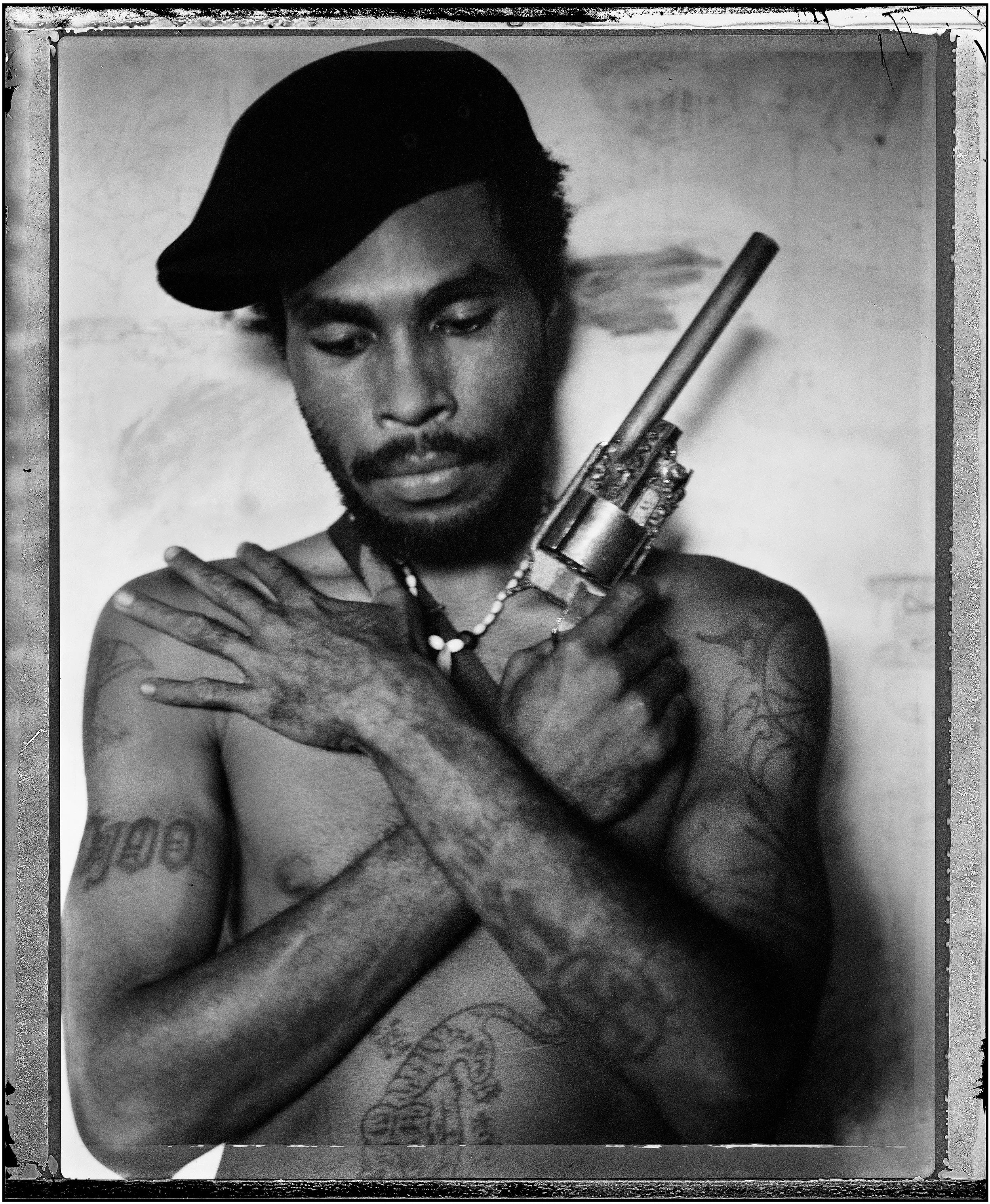
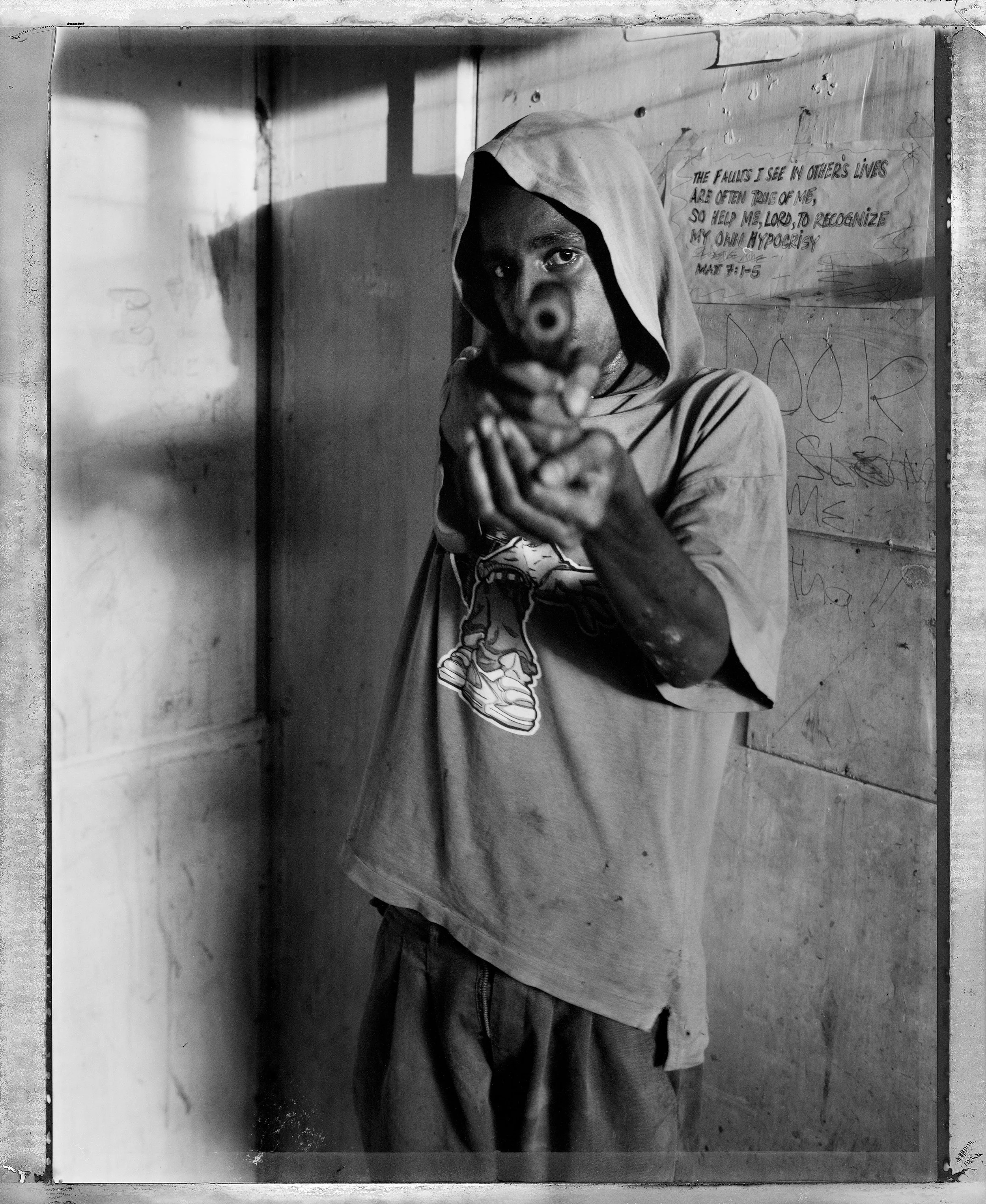
In Papua New Guinea, this reality is embodied by Raskol gangs—loosely organized criminal groups whose name comes from tok pisin slang for “criminal.” Comprised largely of unemployed young men and teenagers, Raskols engage in robberies, raids, and carjackings as a means of survival and protection within environments shaped by instability and neglect. Their violence reflects a broader youth crisis, rooted less in criminal identity than in desperation and fractured futures.
In Raskols, STEPHEN DUPONT confronts the facelessness of gang warfare by focusing on the individuals behind it. After building trust over multiple visits, Dupont established a makeshift studio to create formal portraits of the “Red Devils,” Papua New Guinea’s longest-established Raskol group. By isolating his subjects from the streets and presenting them with dignity and directness, Dupont reveals the human complexity behind violence, challenging viewers to see not just threat, but circumstance, vulnerability, and survival.